
A tomahawk is the steak people take pictures of. It’s a thick bone-in ribeye with a long, clean rib bone, and it’s easy to ruin: charred outside and raw by the bone. Here’s how our chefs cook a tomahawk steak evenly every time with the reverse sear, how to buy and cook wagyu (American, Australian and Japanese A5), and what both cost per pound in our November 2026 price check.
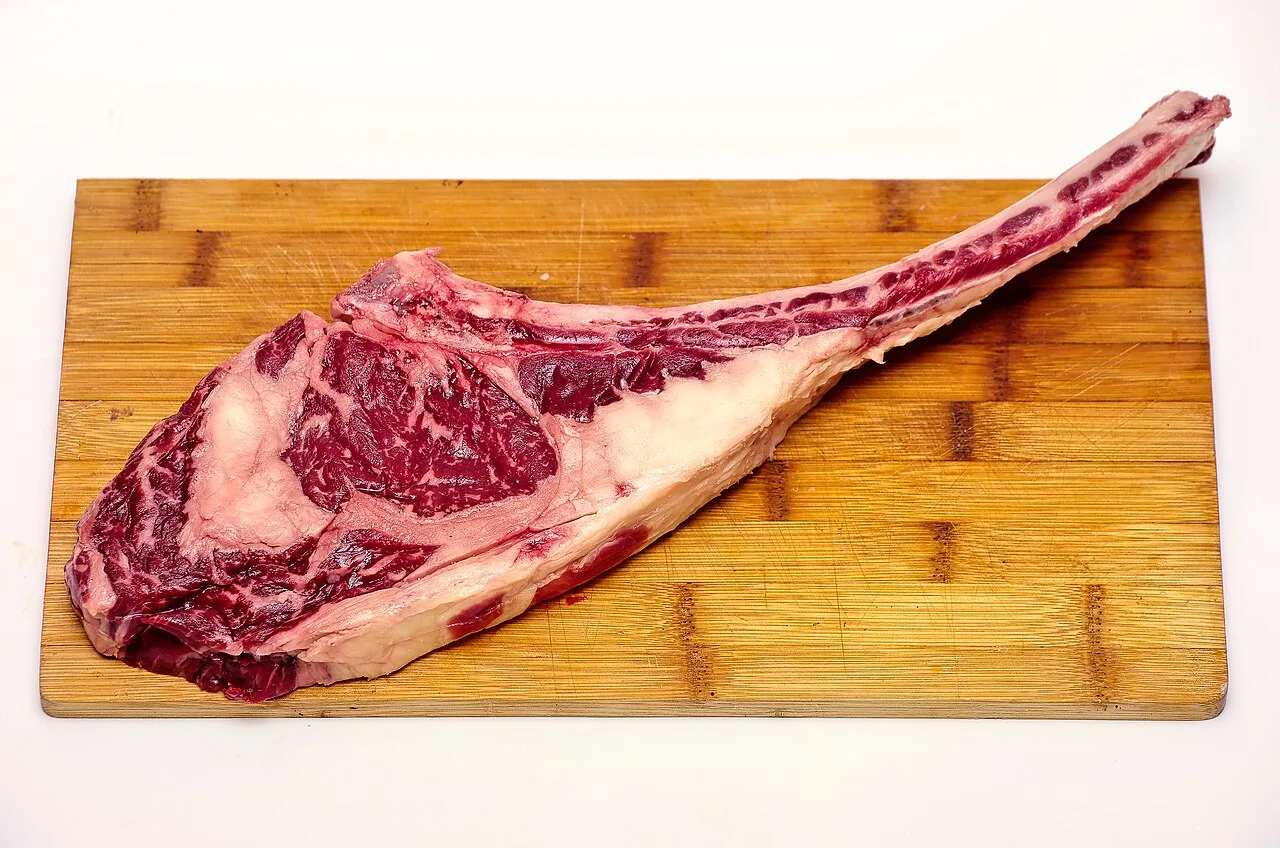
What a tomahawk steak is
A tomahawk is a bone-in ribeye from the rib section, cut one rib thick, with 5 inches or more of the rib bone left on and scraped clean (“frenched”). The meat is exactly what you get on a cowboy steak or a slice of prime rib: the tender eye, the rich ribeye cap and a strip of fat between them. The long handle doesn’t add flavor. It adds drama, which is why steakhouses carve it at the table.
Because it’s about 2 inches thick and weighs 2 to 3 pounds, a tomahawk cooks more like a small roast than a steak. Throw it on a hot grill and the outside burns long before the center warms up. That’s the problem the reverse sear fixes.
How to cook a tomahawk steak (reverse sear)
The reverse sear cooks the steak gently first, then sears it at the end. You get edge-to-edge pink with a thin, dark crust instead of a gray band under the surface. You need a probe or instant-read thermometer. There’s no reliable way to judge a 2-inch steak by touch.
- Salt early. Pat the steak dry and salt it on all sides with about 1 teaspoon of kosher salt per pound. Leave it uncovered on a rack in the fridge for at least 2 hours, or overnight.
- Low oven. Heat the oven to 250°F. Put the steak on a rack set in a sheet pan and push a probe thermometer into the thickest part, away from the bone.
- Cook to the pull temperature. Roast until the center reads 120°F for medium-rare (see the chart below). A 2-inch, 2.5-pound tomahawk usually takes 60 to 90 minutes, but always go by the thermometer, not the clock.
- Rest briefly. Let it sit 10 minutes while you heat a large cast-iron pan (or the grill) until it’s smoking hot. Wrap the bone in foil if you want it to stay pale.
- Sear hard. Add a spoon of high-heat oil and sear 60 to 90 seconds per side, then hold the steak on its fat cap edge to render it. In the last minute add butter, garlic and thyme and baste.
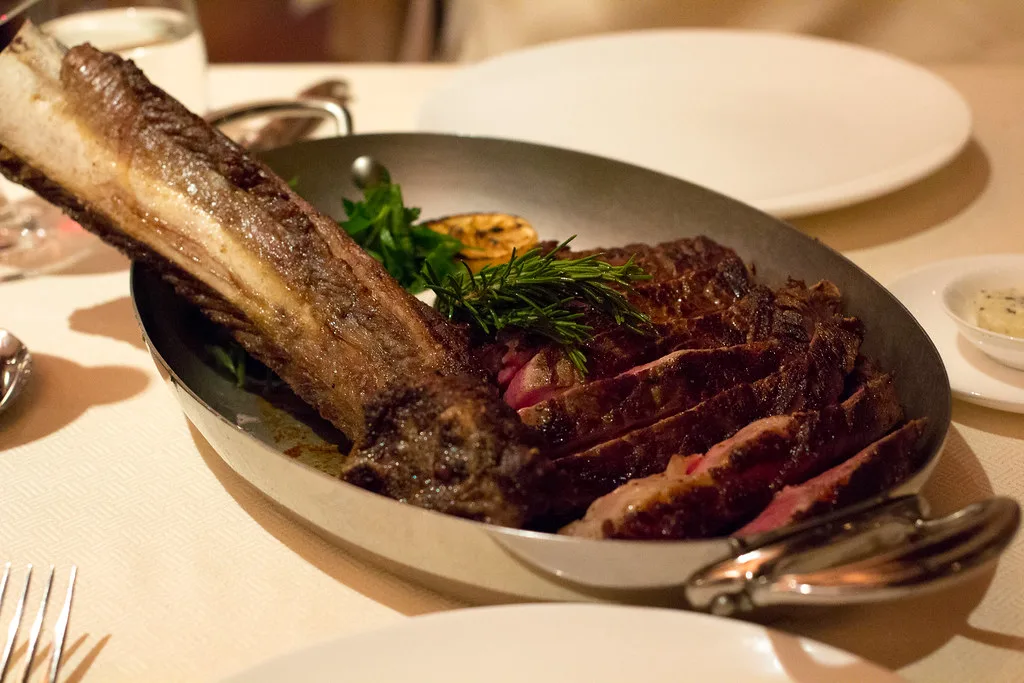
- Carve. Cut the meat off the bone in one piece, then slice it across the grain about ½ inch thick. Serve the bone on the board. Someone always wants it.
On the grill instead
Set up two zones: coals or burners on one side only. Cook the steak on the cool side with the lid down at about 250°F until it reaches the pull temperature, then move it over the hot side for 1 to 2 minutes per side. Keep the bone pointed away from the hottest part of the fire so it doesn’t scorch.
Tomahawk temperature chart
Pull the steak from the oven at the first number. The sear and rest carry it up to the second.
| Doneness | Pull from oven | Final temp | What it looks like |
|---|---|---|---|
| Rare | 115°F | 120–125°F | Cool red center |
| Medium-rare | 120°F | 130–135°F | Warm red-pink center. Our pick for a tomahawk. |
| Medium | 130°F | 135–145°F | Pink center. Best for American and Japanese wagyu, so the fat melts. |
| Medium-well | 140°F | 145–155°F | Slight pink. Meets the USDA’s 145°F + 3-minute rest guideline. |
The USDA recommends cooking whole cuts of beef to 145°F and resting 3 minutes. Most steakhouses serve tomahawks medium-rare.
How to buy and cook wagyu
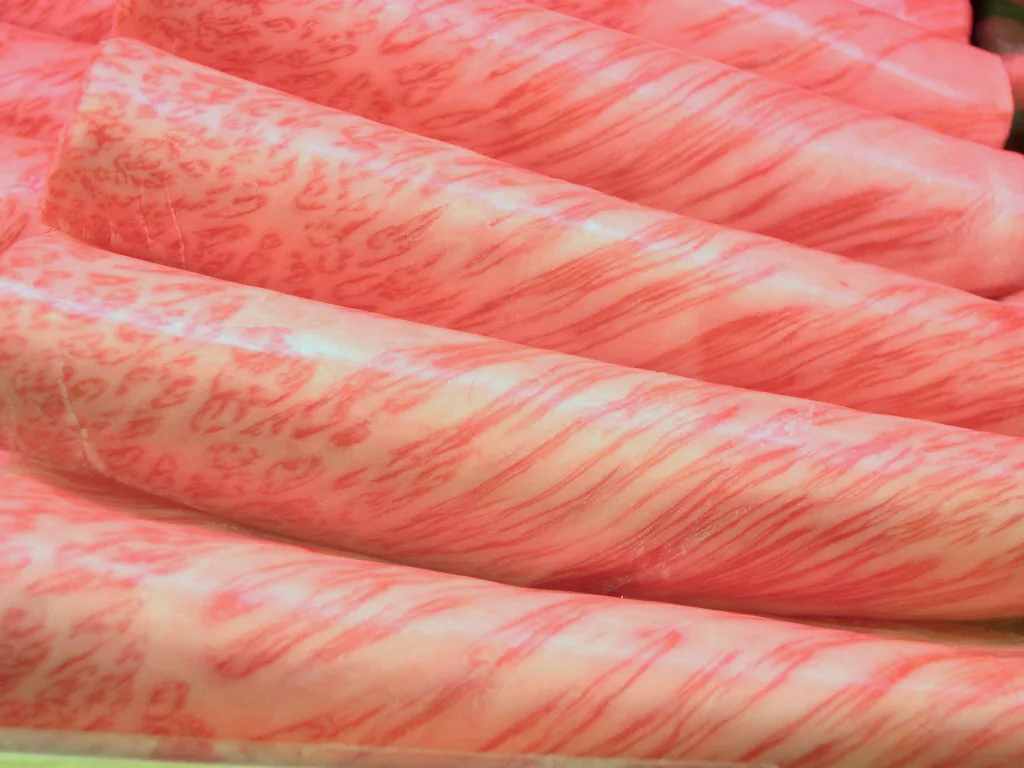
Wagyu simply means “Japanese cattle.” It covers four Japanese breeds, and most wagyu beef comes from the Japanese Black. What makes it special is marbling: fat laced through the muscle instead of around it. That fat melts at a lower temperature than regular beef fat, which is why good wagyu feels like it melts on your tongue.
The three kinds you’ll see in LA
- Japanese wagyu (A5). Raised and graded in Japan. The letter (A to C) rates yield and the number (1 to 5) rates quality, so A5 is the top grade, with a marbling score (BMS) of 8 to 12. Kobe is one famous brand of it, from Tajima cattle raised in Hyogo Prefecture. Others include Miyazaki, Hokkaido, Omi and Olive wagyu.
- American wagyu. Usually wagyu crossed with Angus. It’s beefier and less rich than A5, and you cook and portion it like a regular steak. Most wagyu tomahawks are American.
- Australian wagyu. Graded on the same BMS scale. Often between American and Japanese in richness and price.
How to cook A5 wagyu
Forget the thick-steak playbook. A5 is so rich that a 10-ounce steak serves 3 or 4 people. Cut it about ¾ inch thick, let it sit out for 20 minutes, and heat a cast-iron pan until it’s very hot. Rub a trimmed piece of the wagyu fat around the pan instead of using oil, then sear the steak 45 to 60 seconds per side. Rest it 2 minutes, slice it into finger-width strips, and finish with flaky salt. A little fresh wasabi or yuzu kosho cuts the richness.
How to cook an American wagyu tomahawk
Use the same reverse sear as above, but aim for medium-rare to medium (130 to 135°F). With more marbling than a Prime steak, a little more heat lets the fat soften instead of staying waxy. Slice it thinner than you would a regular ribeye.
What tomahawk and wagyu cost: our November 2026 price check
Most guides only say “expensive.” We checked the listed price and weight of tomahawks and wagyu ribeyes at six online steak shops on November 4, 2026, and worked out the price per pound. Prices are before shipping and tax, and some items were sold out.
| Steak | Weight | Price | Per lb |
|---|---|---|---|
| USDA Prime tomahawk | |||
| Porter Road, Tomahawk Ribeye | 2.75 lb | $135.00 | $49 |
| Allen Brothers, Prime Tomahawk Ribeye | 30–34 oz | $119.95 | $60 |
| Snake River Farms, Dry-Aged Prime Tomahawk | 2.5 lb | $149.00 | $60 |
| Lobel's, USDA Prime Dry-Aged Tomahawk | 36 oz | $199.95 | $89 |
| American Wagyu tomahawk | |||
| Wagyu Shop, Natural American Wagyu Tomahawk | 42 oz | $159.00 | $61 |
| Snake River Farms, Wagyu Tomahawk (Black grade) | 2.5 lb | $165.00 | $66 |
| Meat N' Bone, Wagyu Tomahawk (BMS 8–9) | 3 lb | $199.99 | $67 |
| Snake River Farms, Wagyu Tomahawk (Gold grade) | 2.5 lb | $199.00 | $80 |
| Australian Wagyu tomahawk | |||
| Wagyu Shop, Australian Wagyu Tomahawk | 3 lb | $259.00 | $86 |
| Allen Brothers, Westholme Australian Wagyu Tomahawk | 30–34 oz | $189.95 | $95 |
| Japanese A5 Wagyu | |||
| Wagyu Shop, Miyazaki A5 Tomahawk | 3.5 lb | $629.00 | $180 |
| Wagyu Shop, Hokkaido A5 Ribeye (boneless) | 10 oz | $149.00 | $238 |
| Wagyu Shop, Miyazakigyu A5 Ribeye (boneless) | 10 oz | $159.00 | $254 |
| Wagyu Shop, Kobe Beef A5 Ribeye (boneless) | 10 oz | $349.00 | $558 |
Source: each shop’s listed product price and weight (porterroad.com, allenbrothers.com, snakeriverfarms.com, lobels.com, wagyushop.com, meatnbone.com), checked November 4, 2026. Where a range was given (30–34 oz), we used the middle. Bone-in weights include the bone.
What it shows: a USDA Prime tomahawk ran about $49 to $89 a pound, and an American wagyu tomahawk only about $61 to $80 a pound. That’s a smaller jump than most people expect. Australian wagyu cost more, at about $86 to $95. Japanese A5 is a different world: $238 to $558 a pound for boneless ribeye, though because you serve only 2 to 4 ounces each, a portion costs about $30 to $140. To compare shops, see our best steak delivery guide, with a ribeye price-per-pound check at 8 online butchers.
Serving a tomahawk at home
Carve it on a big board at the table, with the bone across the top. Our favorite sides are creamed spinach or the creamed corn from our prime rib dinner, crispy potatoes from our potato recipes and a sharp green salad. For sauce, chimichurri or a horseradish cream beats a heavy steak sauce. A bold red like a Napa Cabernet or a Paso Robles blend holds up to the fat.
Want someone else to handle it? Our chefs carve tomahawks at the table for dinner parties, cook a steakhouse night for two on our date night private chef page, and sear A5 wagyu on the teppanyaki grill at hibachi parties. We cook across LA, from Beverly Hills to Hidden Hills. For a full luxury menu, start with our caviar guide. Feeding a crowd? Our BBQ catering page shows how much meat to plan per guest.
Tomahawk and wagyu FAQ
What is a tomahawk steak?
A tomahawk is a bone-in ribeye cut about one rib thick (usually 2 inches), with the long rib bone left on and scraped clean. The meat is the same as a cowboy or bone-in ribeye steak. The long bone is mostly for show.
How long does it take to cook a tomahawk steak?
With the reverse sear, a 2-inch, 2- to 2.5-pound tomahawk usually takes 60 to 90 minutes in a 250°F oven, plus a 10-minute rest and about 3 minutes in a hot pan. Go by an instant-read thermometer: pull it at 120°F for medium-rare.
What temperature should a tomahawk steak be?
For medium-rare, pull it from the oven at about 120°F and finish around 130 to 135°F after searing and resting. The USDA recommends 145°F with a 3-minute rest for whole cuts of beef.
How many people does one tomahawk feed?
A 2- to 2.5-pound tomahawk feeds 2 to 3 people with sides. Part of the weight is bone, so plan on about 12 to 16 ounces of bone-in weight per person.
Why is a tomahawk steak so expensive?
You pay steak prices for the bone, and each rib section yields only a few tomahawks. In our November 2026 price check, USDA Prime tomahawks sold online for about $49 to $89 a pound.
What does A5 wagyu mean?
It's the top Japanese grade. The letter (A to C) rates how much usable meat the carcass yields, and the number (1 to 5) rates quality, including marbling. A5 beef has a beef marbling standard (BMS) score of 8 to 12.
How much A5 wagyu do I need per person?
Much less than a normal steak. A5 is so rich that 2 to 4 ounces per person is plenty, served in thin slices as one course of a bigger meal.
Can a private chef cook tomahawk or wagyu at home?
Yes. Our chefs carve tomahawks at the table for dinner parties and date nights, and serve A5 wagyu as a seared course or on the teppanyaki grill at hibachi parties.
Have a chef cook it for you
Book a private chef in Los Angeles for a steakhouse dinner at home, with tomahawks carved at the table and an A5 wagyu course.
Get a free quote