
The California roll is the sushi roll that taught America to love sushi, and it was born right here in Los Angeles. Seasoned rice on the outside, sweet crab, creamy avocado and crisp cucumber on the inside, all wrapped around a sheet of nori. No raw fish, no fancy tools needed. Here’s how we make it at home and at our clients’ sushi nights.
What is a California roll?
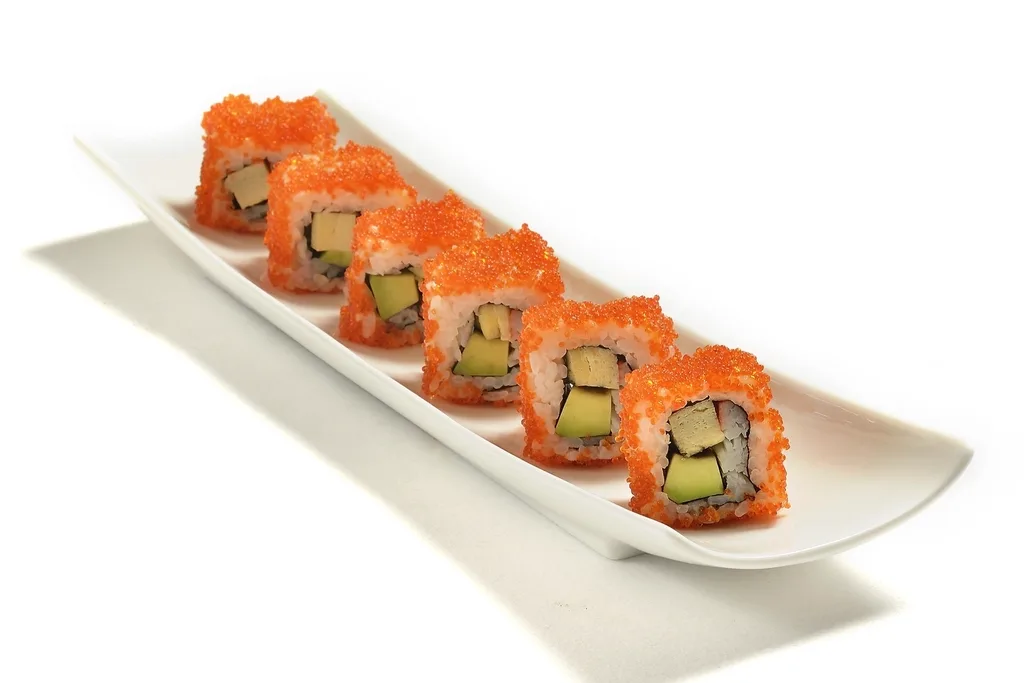
A California roll is an inside-out sushi roll (uramaki) filled with crab, avocado and cucumber. The rice is on the outside, usually coated in sesame seeds or tobiko, and the nori is tucked inside. It has no raw fish, which made it the perfect first taste of sushi for millions of Americans. Today it’s the most popular sushi roll in the country, sold everywhere from sushi bars to grocery stores.
Where the California roll was invented
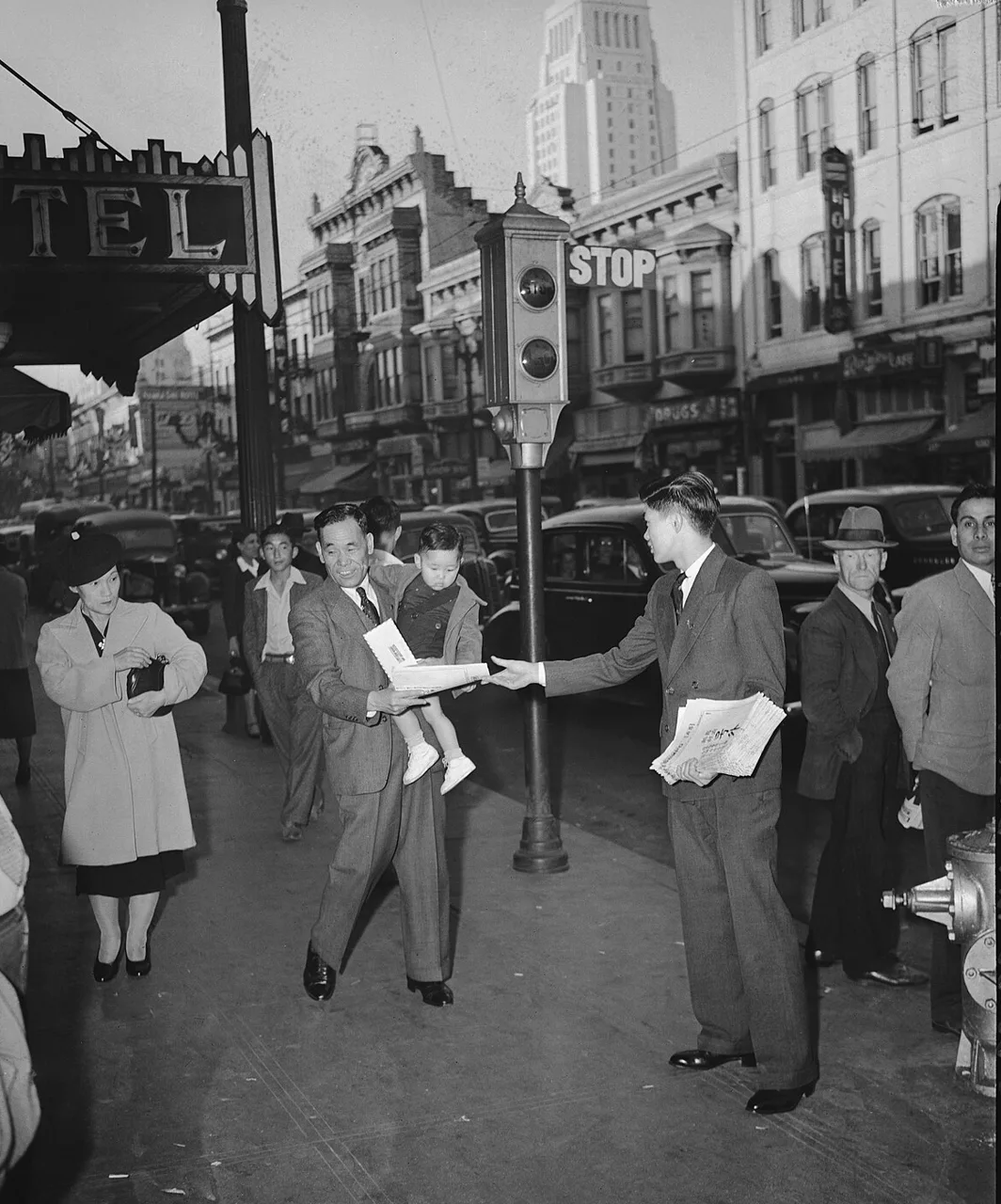
The California roll is most often traced to Tokyo Kaikan, a Japanese restaurant in Little Tokyo, downtown Los Angeles, that had one of the first sushi bars in the United States. In the late 1960s or early 1970s, its sushi chef Ichiro Mashita ran into a problem: toro, the fatty tuna his customers loved, wasn’t always available. He reached for a California ingredient instead, ripe avocado, which has the same rich, buttery texture. Paired with crab and cucumber, the new roll was a hit.
The other big change was turning the roll inside out. Many American diners back then weren’t used to seaweed and would peel the nori off, so the chefs hid it inside and put the rice on the outside. That inside-out style, now called uramaki, became the template for almost every specialty roll that followed.
As with most famous dishes, there’s a rival claim. Chef Hidekazu Tojo in Vancouver says he created an inside-out crab and avocado roll in the 1970s, which he called the Tojo-maki. But Little Tokyo is where the California roll got its name and its fame. By the 1980s it had spread across the country, and it even traveled back to Japan, where it’s sold as kariforunia maki.
California roll ingredients
You only need a handful of ingredients, but each one matters:
- Sushi rice: Short-grain Japanese rice, seasoned with rice vinegar, sugar and salt. Medium-grain Calrose rice, grown in California, works great too.
- Crab: Real cooked crab (lump or king crab) or imitation crab sticks, mixed with a little Japanese mayo.
- Avocado: The California part of the roll. Pick one that’s ripe but still firm, so it slices cleanly.
- Cucumber: Cut into thin matchsticks for crunch. English or Persian cucumbers have thin skins and few seeds.
- Nori: Roasted seaweed sheets. Keep them sealed until you roll, because they go soft in the air.
- Topping: Toasted sesame seeds for the classic look, or tobiko (flying fish roe) for color and pop.
How to make a California roll
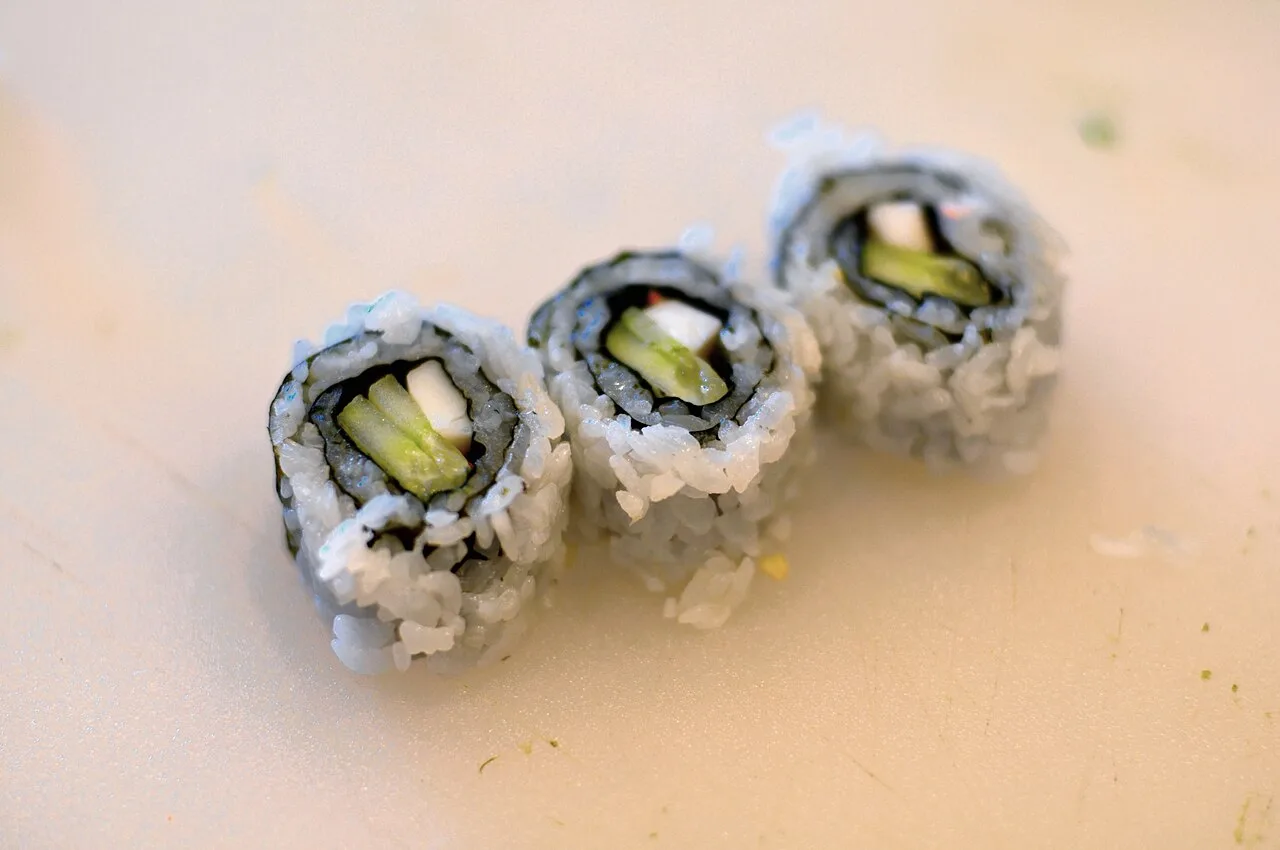
- Season the rice well. Good sushi rice is glossy, a little sweet and a little tangy. Fold the vinegar in gently so you don’t mash the grains.
- Wet your hands. Sushi rice is sticky. Dip your fingers in vinegar water before spreading and it won’t cling to you.
- Wrap the mat. For inside-out rolls, cover the bamboo mat in plastic wrap so the rice doesn’t stick to it.
- Roll tight, press gently. Tuck the first turn firmly over the filling, then use the mat to shape the roll without squashing it.
- Use a wet, sharp knife. Wipe and re-wet the blade between cuts for clean slices.
California Roll
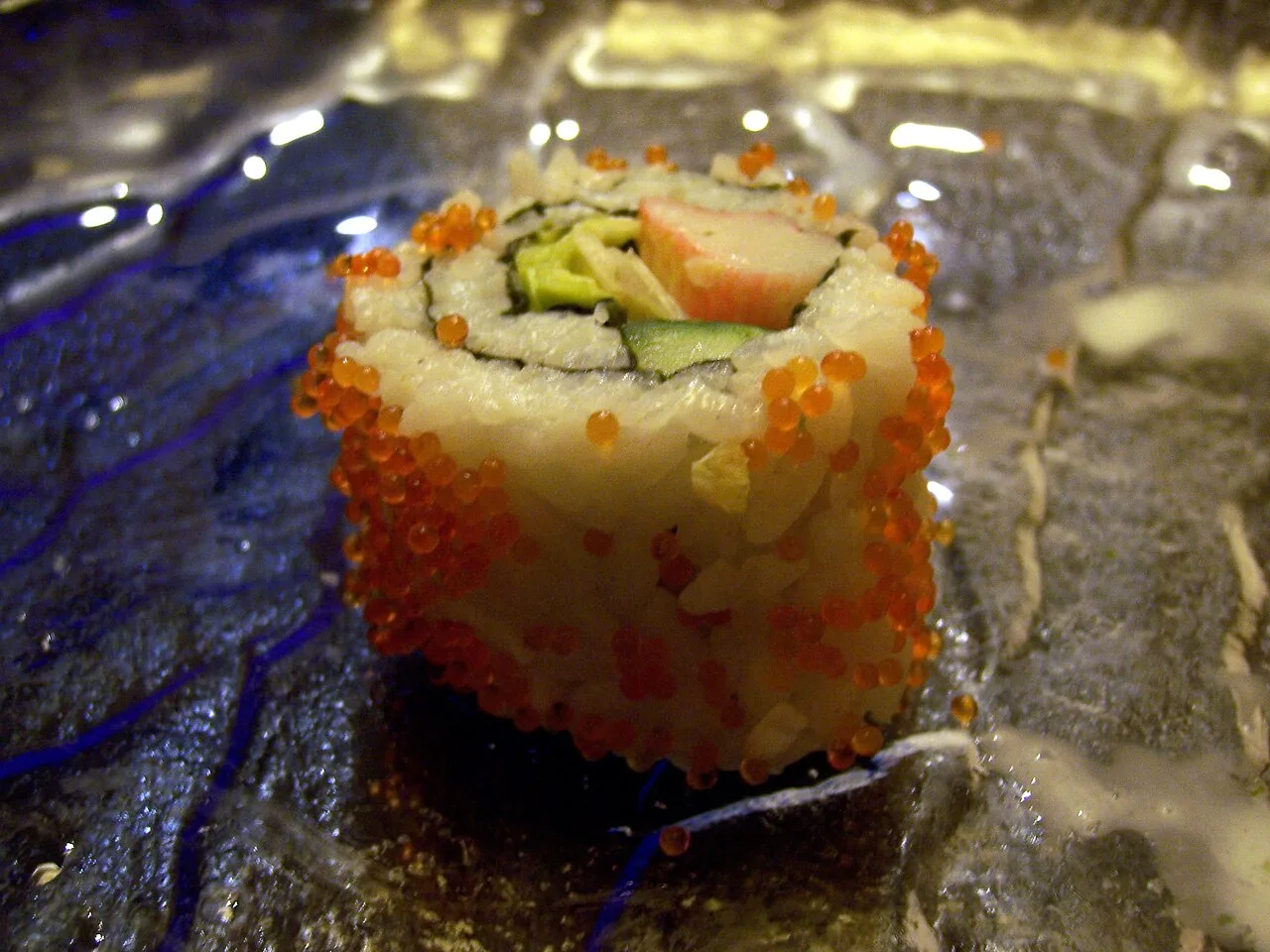
The Los Angeles sushi classic: an inside-out roll of seasoned sushi rice, sweet crab, creamy avocado and crisp cucumber, finished with toasted sesame seeds or bright orange tobiko.
Print recipeIngredients
For the sushi rice
For the filling
For rolling and serving
Instructions
- Rinse the ricePut the rice in a bowl, cover with cold water, swirl and drain. Repeat 4 or 5 times, until the water runs almost clear. Drain in a sieve for 15 minutes.
- Cook the riceCook the rice with 2 cups water in a rice cooker, or in a heavy pot: bring to a boil, cover, turn the heat to low and cook for 15 minutes. Take it off the heat and let it steam, still covered, for 10 minutes.
- Season the riceWarm the rice vinegar, sugar and salt until dissolved. Spread the hot rice in a wide bowl, drizzle over the vinegar mix and fold it in with a rice paddle using gentle cutting strokes. Fan the rice as you go until it cools to room temperature, then cover with a damp towel.
- Prep the fillingShred the crab and mix it with the mayonnaise. Slice the avocado and cut the cucumber into matchsticks about the length of a nori sheet.
- Spread the riceWrap a bamboo rolling mat in plastic wrap. Lay a nori sheet on it, shiny side down. Wet your hands and spread about 1¼ cups rice evenly over the whole sheet in a thin layer. Sprinkle with sesame seeds or tobiko, then flip the sheet over so the nori faces up.
- Fill and rollLay a line of crab, avocado and cucumber across the bottom third of the nori. Lift the edge of the mat, roll it up and over the filling, and tuck it in tightly. Keep rolling, pressing gently with the mat, until you have a firm, even log. Repeat with the rest.
- Slice and serveWith a sharp knife dipped in water, cut each roll in half, then cut each half into 4 pieces, wiping the blade between cuts. Serve right away with soy sauce, pickled ginger and wasabi.
Chef’s notes
Don’t overfill: A thin line of filling and a thin, even layer of rice make a tight roll that slices cleanly. Too much of either and it splits.
Rice temperature: Roll with rice that’s at room temperature, never cold from the fridge. Cold rice won’t stick and tastes chalky.
Variations
- Spicy California roll: Mix the crab with sriracha mayo (2 tbsp mayo plus 1 to 2 tsp sriracha).
- Baked California roll (sushi bake): Press seasoned rice into a baking dish, top with the crab mix, extra mayo and tobiko, and bake at 400°F (200°C) for 12 to 15 minutes. Scoop onto nori squares.
- California roll sushi bowl: Skip the rolling. Top a bowl of sushi rice with crab, avocado, cucumber, sesame seeds and a drizzle of soy sauce.
- Crunchy roll: Roll the outside in tempura flakes or crushed panko toasted in a pan.
- Real crab upgrade: Use fresh Dungeness crab in winter, when it’s in season on the West Coast.
- Vegetarian: Leave out the crab and add more avocado, carrot and mango.
California roll FAQ
What is in a California roll?
A California roll is made with sushi rice, nori, crab (real or imitation), avocado and cucumber. It’s usually rolled inside out, with the rice on the outside, and coated in sesame seeds or orange tobiko.
Is a California roll raw?
No. A California roll has no raw fish. The crab is cooked and the rest is avocado, cucumber, rice and seaweed, which is why it’s a favorite first roll for people new to sushi.
Who invented the California roll?
It’s most often credited to sushi chef Ichiro Mashita at Tokyo Kaikan, a Japanese restaurant in Little Tokyo, Los Angeles, in the late 1960s or early 1970s. He swapped fatty tuna for avocado. Vancouver chef Hidekazu Tojo also claims an early version of the inside-out roll.
Why is the rice on the outside of a California roll?
The inside-out style, called uramaki, hides the seaweed. Early American diners weren’t used to nori and often peeled it off, so LA sushi chefs rolled it inside where nobody could see it.
Should I use real crab or imitation crab?
Both work. Real lump or king crab tastes sweeter and richer. Imitation crab (kanikama) is what most restaurants use; it’s cheaper, already cooked and easy to roll.
Can I make California rolls ahead of time?
They’re best within a few hours. Keep them covered at cool room temperature. In the fridge, the rice hardens, so if you must chill them, wrap each roll tightly in plastic and slice just before serving.
Do I need a bamboo mat to make sushi?
It helps, but you can roll with a clean kitchen towel covered in plastic wrap. Press firmly and evenly as you roll.
More LA classics
The California roll is one of many famous dishes born in Los Angeles. Try our Chinese chicken salad from Santa Monica, the Hollywood Cobb salad, the downtown French dip and the Shirley Temple. Want a chef to roll sushi at your next party? We cook in homes across the city for dinner parties, office events and weekly meal prep. See all our services. Craving street food? Make our Korean tacos, the Kogi-style short rib tacos that started LA’s food truck craze. Thirsty? Blend up an Orange Julius, the frothy orange drink invented at a downtown LA juice stand in 1926. Late-night craving? Make animal style fries, the In-N-Out secret menu classic from Baldwin Park. Taco night? Grill our carne asada and pour a cold horchata. Craving takeout? Make orange chicken, the Panda Express classic born in SoCal. Eating light? Try the viral Jennifer Aniston salad from the Friends era in Burbank. Hosting something special? Make Nobu’s miso black cod, the Beverly Hills luxury classic. Pouring drinks? Mix a Moscow Mule, the copper-mug cocktail born on the Sunset Strip. Feeding a holiday crowd? Roast a Lawry’s-style prime rib, the Beverly Hills carving-cart classic. Pouring something tropical? Shake a classic Mai Tai, the tiki cocktail with Hollywood roots. For dessert, blend a homemade Dole Whip, the pineapple soft serve from Disneyland’s Tiki Room. Craving something crispy? Roll Olvera Street-style beef taquitos with avocado sauce, the downtown LA original since 1934. Want a drive-thru classic at home? Fold a homemade Crunchwrap Supreme, from the taco chain born in Downey, or make Cheesecake Factory-style Chicken Madeira, a Beverly Hills original. Brunch plans? Fry up Roscoe’s-style chicken and waffles, the soul food classic LA made famous in 1975. Craving takeout? Toss Panda-style honey walnut shrimp with candied walnuts, the banquet dish first served at Panda Inn in Pasadena.
Book a private chef in Los Angeles
Tell us your date, guest count and what you’re craving. We’ll design the menu, shop, cook and clean up. Rather leave the rolling to a pro? Book a private sushi chef at home for omakase or a hand roll bar.
Get a free quote