
Personalized weekly food · Los Angeles
High-Protein Meal Prep Los Angeles
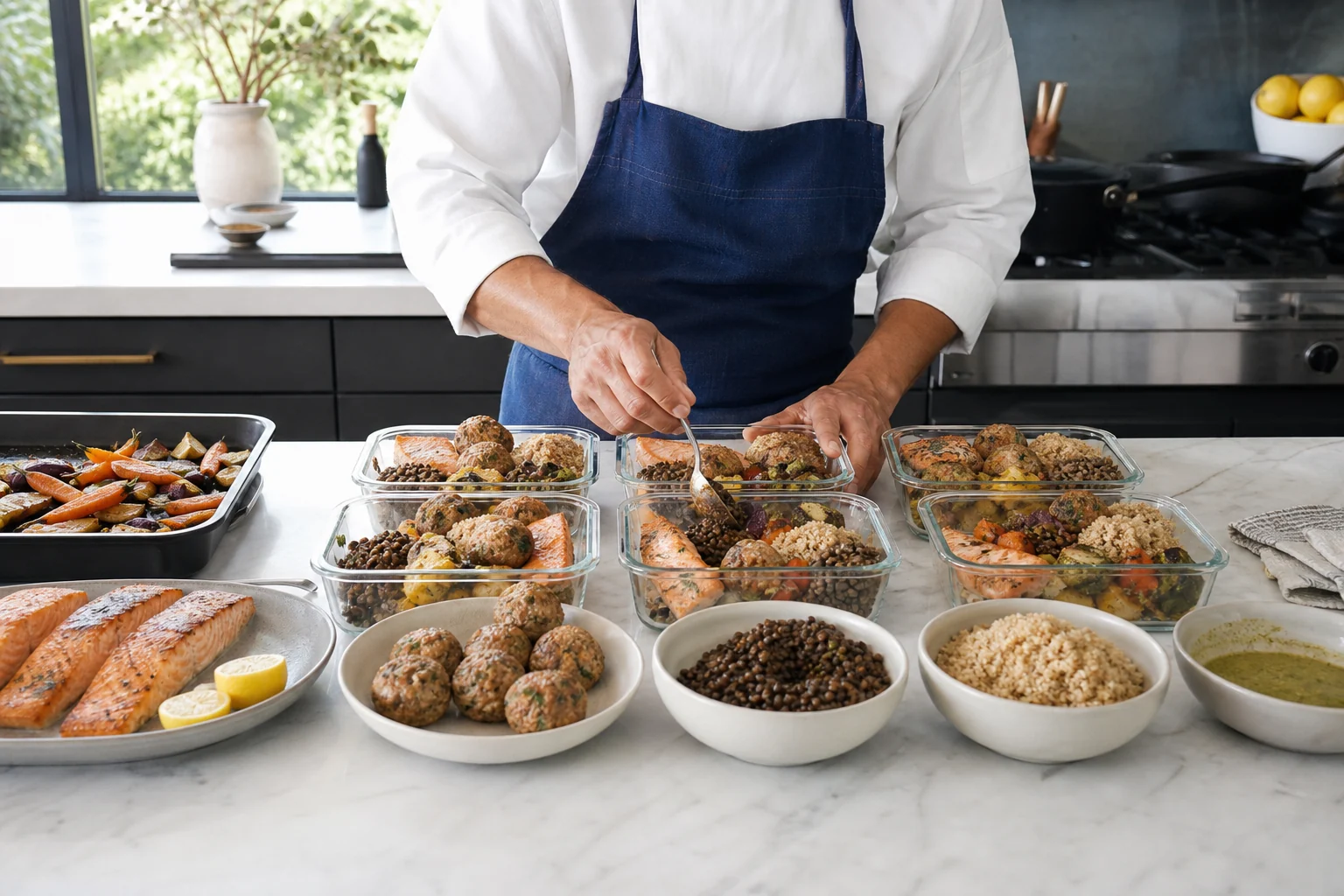
High-protein meal prep in Los Angeles is a personalized weekly service that turns your preferred proteins, portions, cuisines and schedule into chef-prepared meals ready for the refrigerator. The Private Chef Los Angeles can plan, source, cook, portion and package food around the way you actually eat—not a generic subscription menu.

Los Angeles makes eating well look easy—until a long commute, an early training session and an evening meeting land on the same day. The problem is rarely knowing that chicken, salmon, beans or Greek yogurt contain protein. It is having satisfying food cooked, portioned and ready when the convenient alternatives are drive-through meals or another delivery order.
A chef-led plan solves the operational part. It can cover weekday lunches, post-workout dinners, family meals or a combination. It can also build flavor into the plan through marinades, sauces, roasting, braising and smart menu rotation. “High protein” should describe a useful direction, not condemn you to dry chicken and broccoli five times in a row.
If you are comparing broader options first, visit our meal prep services in Los Angeles. This guide focuses on protein-forward planning, customization and what to ask before hiring a chef.
Beyond a fixed menu
What makes private-chef high-protein meal prep different?
Your definition of high protein
Some clients want protein emphasized at every meal. Others care most about lunch and dinner or follow targets supplied by a registered dietitian. A custom plan begins with your goals and preferences instead of assigning everyone the same number.
Flavor is part of adherence
Herb salsa, romesco, citrus tahini, chimichurri and carefully built pan sauces can keep lean proteins interesting. Menus rotate across cuisines and techniques so convenience does not become monotony.
Portions fit your week
Meals may be individually packaged for workdays, arranged family-style for dinner or prepared as flexible components. The quantity can reflect travel, restaurant plans, household size and appetite.
From consultation to refrigerator
How high-protein meal prep works
1. Start with a useful consultation
Share the number of people, meals and days you want covered. Explain your favorite proteins, disliked foods, preferred cuisines, portion expectations, allergies and whether the meals need to travel to an office or gym. If a clinician or registered dietitian has given you a specific protein or calorie target, provide that instruction; a chef can build food around it but should not invent medical nutrition advice.
2. Approve a menu with real variety
A strong weekly menu uses overlap intelligently. One batch of roasted vegetables may support two meals, but different proteins, sauces and fresh garnishes keep the plates distinct. Your chef should also sequence dishes by quality: delicate fish may be enjoyed earlier, while braises, meatballs and freezer-friendly items can cover later days.
3. Let the chef source, cook and portion
Depending on the service arrangement, food may be cooked in your kitchen or prepared off-site and delivered. Clarify who buys groceries, which containers are used, whether nutrition estimates are available, and how packaging, cleanup and delivery are handled. For ongoing service, feedback should shape the next menu.
4. Store and reheat according to the label
Dish-specific instructions matter. Ingredients, cooling, packaging and refrigerator temperature all affect storage. FoodSafety.gov advises keeping refrigerators at 40°F or below, refrigerating perishables promptly and generally using cooked leftovers within three to four days. Follow the label supplied with each meal and freeze suitable later-week dishes when directed.

Protein plus the rest of the plate
What belongs in a well-built meal?
Protein is one part of a complete meal. Vegetables, fruit, grains or other carbohydrate sources, fats and sauces contribute energy, fiber, texture and pleasure. USDA’s MyPlate protein-food guidance encourages variety across seafood, lean meats and poultry, eggs, beans, peas, lentils, nuts, seeds and soy foods.
That variety is especially valuable during meal prep. Salmon offers a different texture from turkey meatballs; lentils can add plant protein and fiber; yogurt-based sauces can bring creaminess; tofu or tempeh can absorb bold marinades. A chef can distribute these options across the week based on taste, dietary pattern and reheating quality.
For macro-conscious clients, portioning can be consistent while flavor changes. Exact nutrition depends on ingredient weights, brands and recipes. Ask whether the service provides calculated estimates or simply portions food according to your written targets.
Tailored to the client
Who benefits from a protein-forward plan?
Busy professionals often use individually packed meals to make lunch predictable between calls. Athletes and active clients may want food ready around training, based on goals already established with an appropriate nutrition professional. Families can use larger-format proteins and sides, then adjust plates for different appetites. Clients managing travel may need fewer fresh dishes plus strategically frozen options.
Dietary pattern does not have to be one-size-fits-all. Omnivorous, pescatarian, vegetarian and vegan menus can all emphasize protein with different ingredient strategies. Gluten-free, dairy-free and lower-carbohydrate requests may also be discussed. Allergies are different from preferences: disclose the allergen, reaction severity and cross-contact concerns before booking so the team can determine whether the request can be safely accommodated.
For recurring support beyond a single week, see our monthly meal prep in Los Angeles. Households balancing several eaters may also find our family meal prep guide useful.

Compare the whole service
How to choose high-protein meal prep in Los Angeles
Do not compare services on a protein headline alone. The meaningful differences are customization, culinary quality, labor included, food-safety practices and how well the format fits your routine.
| Option | Customization | Your work | Best fit |
|---|---|---|---|
| Private chef meal prep | Built around your preferences, schedule and household | Minimal | Clients wanting a premium, highly personal service |
| Prepared-meal subscription | Choose from a rotating catalog | Heat and serve | Convenience with standardized portions |
| Meal kit | Limited swaps | Cook and clean | People who enjoy cooking but want planning reduced |
| DIY batch cooking | Complete control | Highest | Budget-first plans with time available |
Questions worth asking
- Is the menu truly customized or selected from a preset catalog?
- Do you cook in my home, deliver, or offer both?
- How do you handle exact portion or macro instructions?
- Are groceries, containers, travel, delivery and cleanup included?
- How are meals cooled, labeled, stored and reheated?
- How do you address allergies and cross-contact?
- Can the quantity change for travel or a different training week?
- Which Los Angeles neighborhoods are within the service area?
What does high-protein meal prep cost?
Pricing varies with meal count, servings, ingredient choices, dietary complexity, grocery cost, preparation location, delivery distance and service frequency. Premium seafood and specialty ingredients affect the proposal differently from a simpler menu. Ask for an itemized quote and confirm whether groceries are included. For broader context, read our guide to private chef costs in Los Angeles.
Your goals, cooked with flavor
Put a personalized high-protein week in your refrigerator.
Tell The Private Chef Los Angeles how many meals you need, which proteins and cuisines you enjoy, where service is needed and any dietary considerations. We will help shape a practical custom plan.
Frequently asked questions
High-protein meal prep Los Angeles FAQ
What is high-protein meal prep?
It is advance menu planning, cooking and portioning that deliberately emphasizes protein-rich foods. A private chef version can include consultation, grocery sourcing, custom menus, cooking, packaging, labeling and cleanup or delivery.
How much protein should be in each meal?
There is no universal per-meal target. Needs vary with body size, age, activity, health status and overall diet. Use guidance from a qualified healthcare professional or registered dietitian for a personal target; a chef can then portion recipes around written instructions.
Can a chef calculate calories and macros?
Some services provide recipe-based estimates and others portion according to targets you supply. Calculations depend on accurate ingredient weights, brands and recipes, so ask exactly what is included and remember that estimates are not medical nutrition therapy.
Can high-protein meal prep be vegetarian or vegan?
Yes. Beans, peas, lentils, tofu, tempeh, edamame, seitan where appropriate, nuts, seeds and selected grains can support protein-forward plant-based menus. Vegetarian plans may also use eggs and dairy according to preference.
How long do prepared meals last in the refrigerator?
It depends on the dish, ingredients, cooling method, packaging and refrigerator temperature. Follow each meal label. FoodSafety.gov generally lists cooked leftovers at three to four refrigerated days and recommends a refrigerator at 40°F or below.
Do you offer high-protein meal delivery in Los Angeles?
The Private Chef Los Angeles can discuss in-home meal prep and delivered meal-prep formats, subject to location, schedule and service availability. Use the consultation form to share your neighborhood and preferred frequency.
Can the menu accommodate allergies or gluten-free and dairy-free requests?
Many preferences and dietary patterns can be discussed. Serious allergies require separate disclosure about the allergen and cross-contact risk so the team can assess whether it can safely meet the request. No kitchen should guarantee an accommodation before that conversation.
Is private-chef meal prep only for athletes?
No. It can help professionals, families, older adults, frequent travelers and anyone who wants convenient meals centered on preferred protein foods. The menu and portions should reflect the individual client rather than a fitness stereotype.